Canadian Paddler Rod Wellington & a MO Riv Source Start

Rod-photo_Coops_12-18-2012
Photo by Rod Wellington

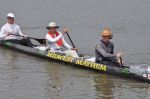
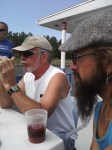
Canadian paddler Rod Wellington passed through Cooper’s Landing last Monday and Tuesday, Dec 17-18.  He is paddling from the source of the Missouri River at Brower’s Spring, MT, to the Gulf of Mexico, all self-propelled.  This is the longest river system in North America, and fourth longest in the world.  Rod will be the first Canadian to paddle the MO from source to sea.  Australian paddler Mark Kalch completed the route earlier this year.

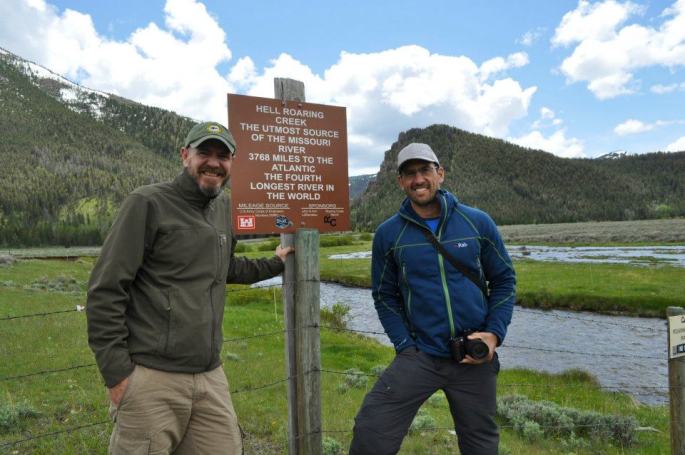
Norm Miller (left) and Mark Kalch (right) at Hell Roaring Creek in June 2012

Altogether, Rod will paddle seven of the longest rivers on seven different continents.  The Missouri River is his first.  He has been on the river since June, a total of six months.  His river systems project could take up to 15 years.

Photo by Rod Wellington

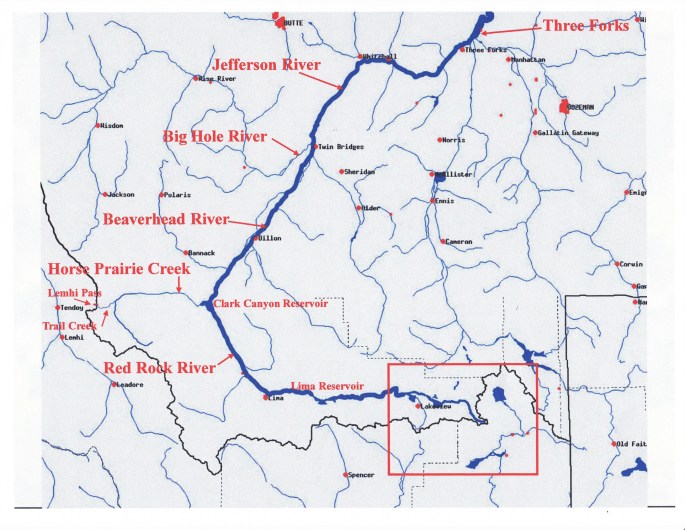
After a pot luck dinner and visiting with many interested locals, he graciously sat with me and poured over photos and a map from the Brower’s Spring area, the Missouri River source, to Three Forks, the headwaters of the MO Riv, a 298 miles stretch and one in which I am debating whether to include on my trip.

MAP_Browers-ThreeForks-USA

MAP_Browers-ThreeForks_flip

Browers-August
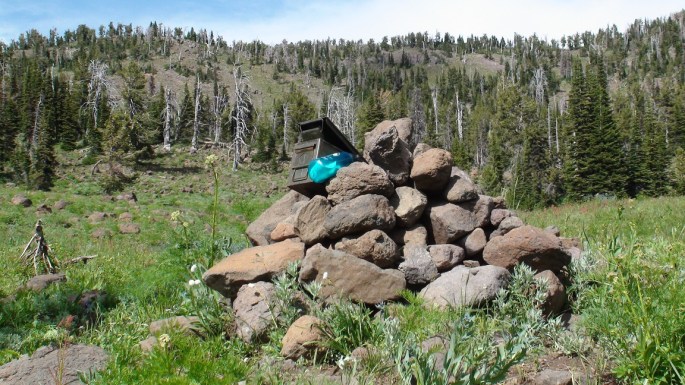
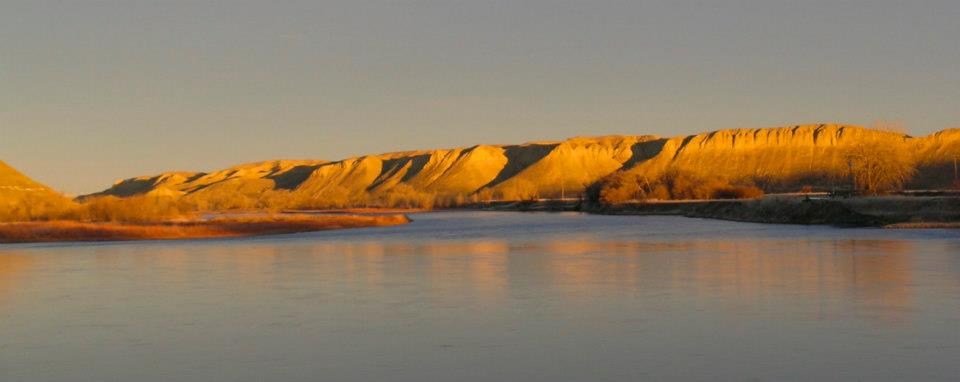
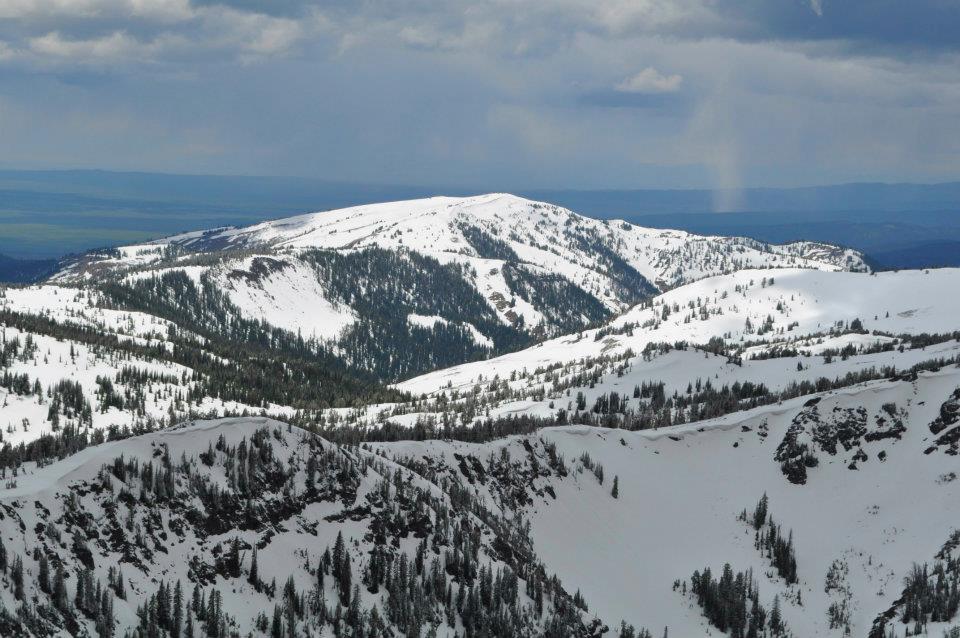
Cairn at Brower’s Spring with Continental Divide behind. Photo taken in August 2011 while scouting the source (photo by Rod Wellington)
Continental Divide at Brower's Spring in June 2012-by Rod Wellington
Continental Divide at Brower’s Spring in June 2012 (photo by Rod Wellington)
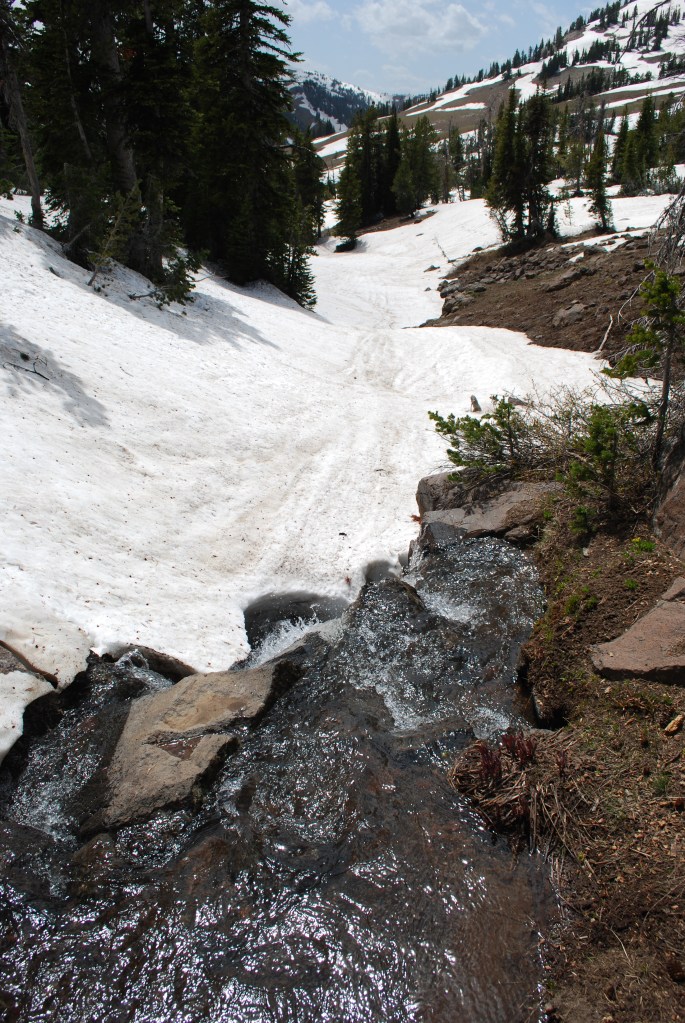
Looking down from the spring in June 2012.  Undoubtedly, April will have a LOT more snow. -by Rod Wellington
Looking down from the spring in June 2012. Undoubtedly, April will have a LOT more snow. (photo by Rod Wellington)

No firm decisions yet as there are a few dicey stretches, like hiking/skiing/snowshoeing over snow for seven miles into Brower’s Spring, and seven miles out.  And, a few days of dodging and portaging around farmers’ barbed wire/electrical/corrugated panel fences which cross a mere 20′ wide water way below the Lima Reservoir on the Red Rock River.  Not to mention that the Red Rock Lakes Wildlife Refuge, located above the Lima Reservoir, is closed in April.

At least now I have a greater understanding of what my obstacles and options are.  I have an unrelenting desire to capture some of that 298-mile stretch for its sheer beauty.  Some of it may have to be biked.  Thanks, Rod, for spending that time with me.

Jefferson River below Twin Bridges
Jefferson River below Twin Bridges (photo by Norm Miller)
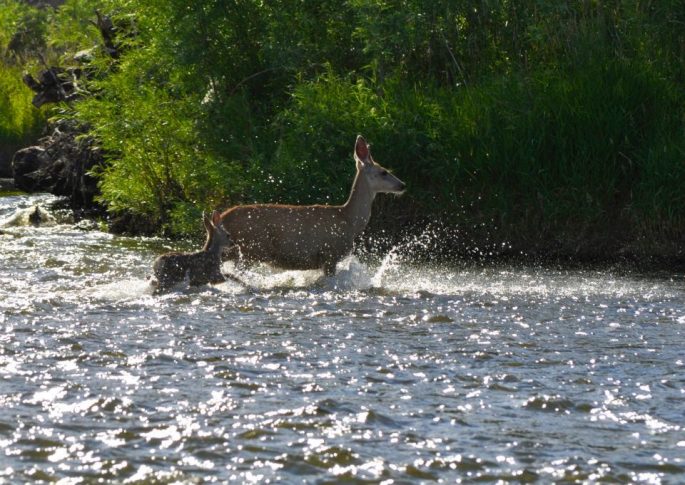
Deer on Jefferson River (photo by Norm Miller)
Rain approaching Jefferson River (photo by Norm Miller)

Understandably, Rod needed to leave Cooper’s Landing and continue

Rod and Jonathan at Cooper's Landing.
Rod and Jonathan at Cooper’s Landing. Notice the wood-carved hawk that is Jonathan’s handiwork.

paddling towards the Gulf of Mexico.  However, our first major storm

of the season hit yesterday, the day after he left.  Winds gusted to 50 or 60 mph, and snow was blizzard-like.  One caring and supportive local, Jonathan Lauten, set out to find Rod and make sure he was okay.  He found him across the river below Jefferson City, but was not able to make contact.  We learned that Rod was hunkered down in his tent, warm and dry.

Rod laying low in a miserably cold, windy, and snowy storm. -by Jonathan Lauten
Rod laying low in a miserably cold, very windy, and snowy storm (you can see the wind plowing into the side of his tent). (photo by Jonathan Lauten)

Jonathan’s comment from Facebook:

I found him, but I couldn’t get to him!
This pic was taken from a bluff across the river 4:00 12/20/12.
Of course, it was hard to pick him out amongst all those other campers on the Missouri River in a blizzard with 50 mph winds…

Here is a post from Rod yesterday morning, much to our relief:

Dec. 20, 10am – Currently hunkered down in my tent on a sandbar near Jefferson City, Missouri. Outside: blowing snow, sustained winds of 35-40 mph with gusts of 50 mph or more. Unable to keep tent and tent fly anchored. I’ve arranged heaviest gear on windy side of tent to act as a buffer. I’m warm and dry. No paddling today. Expected low tonight: 5F with windchill. Thanks to Steve Schnarr, Gary Leabman, Robin Kalthoff and Jessica Giard for checking on me via phone. Still smiling!

Great meeting Rod and spending some time together.  I think I speak for lots of other folks who met him as well.

Rod and me -photo by Jonathan Lauten
Rod and me (photo by Jonathan Lauten)

You can read posts and watch videos from his trip thus far, and track his current progress on his FB page: “Rod Wellington.”

Happy paddling!

Let the adventure begin! | Mizzou Wire | University of Missouri

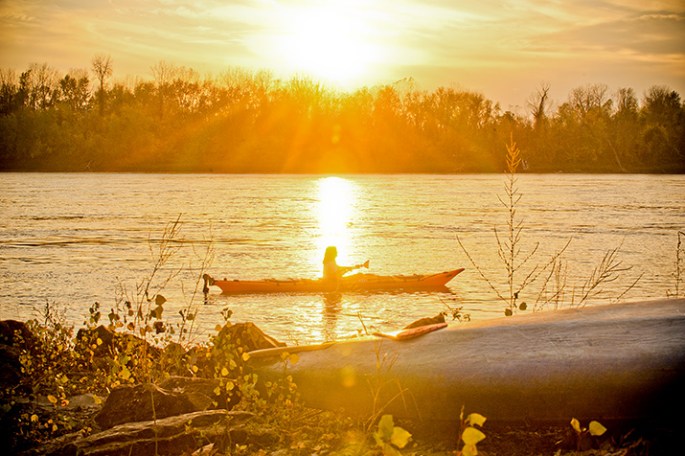
Sunset on the Missouri River, Cooper's Landing, Columbia, MO

Let the adventure begin! | Mizzou Wire | University of Missouri.

Let the adventure begin!

New Mizzou graduate plans record-setting kayaking expedition

  • Story by Nancy Moen
  • Photos by Shane Epping
  • Published: Dec. 7, 2012

December Mizzou graduate Janet Moreland plans to make history on a solo kayaking expedition this spring — and hopes to incorporate her adventures into a middle school curriculum. She’s equipped with 16 years of kayaking experience and a brand-new bachelor’s degree from the MU College of Education.

At 56 and with a new bachelor’s degree from the MU College of Education, one nontraditional student leaves Mizzou to pursue an adventure she’s been dreaming of for years. In May, Janet Moreland will embark on a solo kayaking expedition of the Missouri River from its headwaters at Three Forks, Mont., to St. Louis, a 2,320-mile span of paddling and portaging.

Moreland hopes to become the first woman to navigate that length of the Missouri River solo by kayak and to use the expedition as a teaching tool for social studies and science classes. She views the river as a “living laboratory” for teaching middle-school students about cultural history, geography, the natural environment and social interactions.

Just the thought of the approaching adventure wakes her up at night. “Maybe I’m an adrenalin junkie,” Moreland says.

Moreland’s journey will take three months, far less time than the 20 years she invested in working on a bachelor’s degree in education.

Extreme journey

Moreland has been training for her river adventure for years. The self-described river rat has been kayaking for 16 years, with nine of those on the Missouri River. She runs two miles every other day and has been jogging most of her life.

Moreland will need mental endurance as well as physical stamina to be on the river for days on end. As lonely as the expedition seems, Moreland will find support from a network of kayakers.

There will be fishermen, boaters and towns along the way, but Moreland could spend 10 days to two weeks on the river with no sign of civilization. She says solitude doesn’t bother her; she once lived alone in a house on 220 acres: “I’ve always been extremely independent. The solitude is something I look forward to.”

The tradeoff is the extraordinary beauty she’ll experience. The first 300 miles of the expedition will be engagingly scenic, and if she’s paddling on a cloudy night, light from the towns will reflect off the clouds to show her the way.

But the seven to nine big lakes along the route will offer challenges. One of those lakes is 230 miles long. Moreland’s major concern, however, is wind. Gusts along the river can reach 70 miles an hour, and if the winds are too strong, she’ll need to paddle at night when they die down.

Moreland caught the lure of extreme kayaking seven years ago after meeting paddler Dave Miller, author of The Complete Paddler. Miller had stopped for breakfast at Cooper’s Landing on the Missouri River, where Moreland cooked on Saturday mornings.

She was further hooked after another paddler, Norm Miller of Montana, said he believed she could be the first woman to kayak the entire length of the river solo. In 2004, Norm Miller (no relation to Dave Miller) paddled and hiked the Lewis and Clark route.

Janet MorelandIn September Moreland retired from her job in the MU Sustainability Office. A longtime environmentalist, Moreland thrives on outdoor adventures.

Wilderness and wildlife

Moreland will take an assortment of essential supplies for her journey, and she’ll refresh her two-week food and water supply in the river towns.

She’ll pack an expedition tent that can handle wind, a cook stove, a two-wheel trailer to portage her kayak around the dams, a sleeping bag, warm clothes and boots. She’ll take a flint stone as an emergency fire starter and a hatchet for chopping firewood, building windbreaks and cutting her way through river brush and vegetation.

She’ll keep bear spray on hand for any encounters with grizzly bears.

Because cell phone service will be scarce, she’ll use a laptop to post blogs and update her journal, forming the basis of a book she plans to write. A video camera attached to her kayak will capture images.

Moreland’s students and the public can follow her adventures at loveyourbigmuddy.com.

Trailblazing teacher

“Life is a journey. Live fast. Paddle slow,” sums up Moreland’s philosophy of life and love of adventure. Her goal as a teacher is to show students that it’s possible to follow their dreams, even those dreams considered out of reach.

“Children need to learn to believe they can make things happen they didn’t think were possible, and I want women to know that, too,” she says.

A lifetime of challenges that would test any adventurous spirit has seriously overqualified Moreland for extreme adventure.

She lived alone in Hawaii in the most remote part of the island and in Yosemite National Park. She worked as the first certified female member of a ski patrol in California’s Sierra Nevada Mountains, routinely doing avalanche control with dynamite and sometimes “under-the-rope” skiing on unpatrolled slopes.

She taught wind surfing and tried skydiving. She worked as a commercial salmon fisher in Southeast Alaska and as a carpenter in Bear Valley, Calif., repairing snow-damaged houses and, with two other carpenters, building a redwood house “from the ground up.”

Moreland’s quest for an education degree began in San Francisco, when her daughter, Haley Rose, was in preschool. Attending college part time, Moreland took classes here and there, fitting course work between moves, jobs and family responsibilities.

She moved to Columbia in 1996 after two years in Springfield, Mo., and, in 2005, decided to get serious about a Mizzou degree while working at the university. She retired recently from the Sustainability Office, where she worked on MU’s projects in environmental responsibility.

Her interest in kayaking developed after she learned her house was just down the road from the Missouri River. She drove to Coopers Landing and discovered the river.

“All of a sudden Columbia became home for me,” she says.

Teachable moments

Moreland plans to use her solo kayaking adventure as the basis of a curriculum on river sustainability and stewardship, as well as to build self-esteem in adolescents.

She’s greatly appreciative of and works locally with Missouri River Relief, a volunteer nonprofit organization dedicated to the health of the Missouri River. The organization connects children, teachers and the public to the Missouri River through clean-up activities and educational events.

Partly because of that group, the Missouri River is an “incredibly clean, beautiful wilderness waterway,” Moreland says.

Moreland’s river explorations will continue after she completes this summer’s expedition. She plans to paddle down the Mississippi River, from St. Louis to New Orleans, in summer 2014.

Moreland completed a student-teaching internship during the fall semester at Jefferson Junior High School. She will work as a substitute teacher for Columbia Public Schools in spring semester, while applying for a permanent position after her adventure.
Plenty of Food for Thought

Lake Oahe (photo by Bob Bellingham)

Every morning of every day I think about my trip with great anticipation and longing to get on the water.  I look forward to the solitude and the simplicity, waking in the morning near the water, starting the stove for coffee, searching for whatever wildlife will come my way, taking photos, reading, or writing in a journal.  Perhaps I have set up my tent facing the river so when I wake up I can lay in my sleeping bag gazing at the river and dream about the day ahead, or the day behind.  I have backpacked alone before.  I am comfortable in the wilderness.

Camping alone (1983) in the Mokelumne River Canyon, Sierra Nevada Mountains.
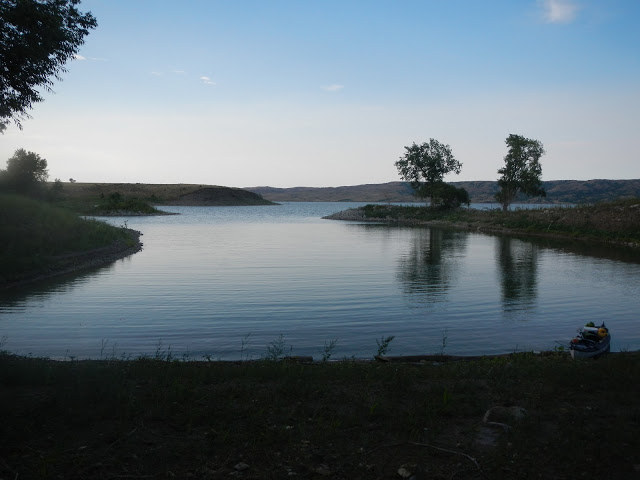
Sheltered Bay on Lake Francis Case (photo by Bob Bellingham)

In three weeks I will have an education degree in social studies and science.  So, this morning I’m thinking about how I can make this trek and this degree work together.  I glance over at my NSTA (National Science Teachers Association) monthly newspaper I get in the mail.  I see a photo of a man on top of a snow-covered mountain.  The caption reads, “Minnesota high school science teacher…uses photographs taken during his world travels to stimulate inquiry in his classes.”  Sweet!  As I read the article, I learn that his photograph introduces a topic, prompts a story, generates student interest, provokes questions to which the students want answers, initiates a real life connection, brings the mountains into his Minnesota classroom, and creates a teachable moment.  BINGO!  I can do that!  My past experiences can provide lots of material.  My upcoming trip will create a file full of opportunities.

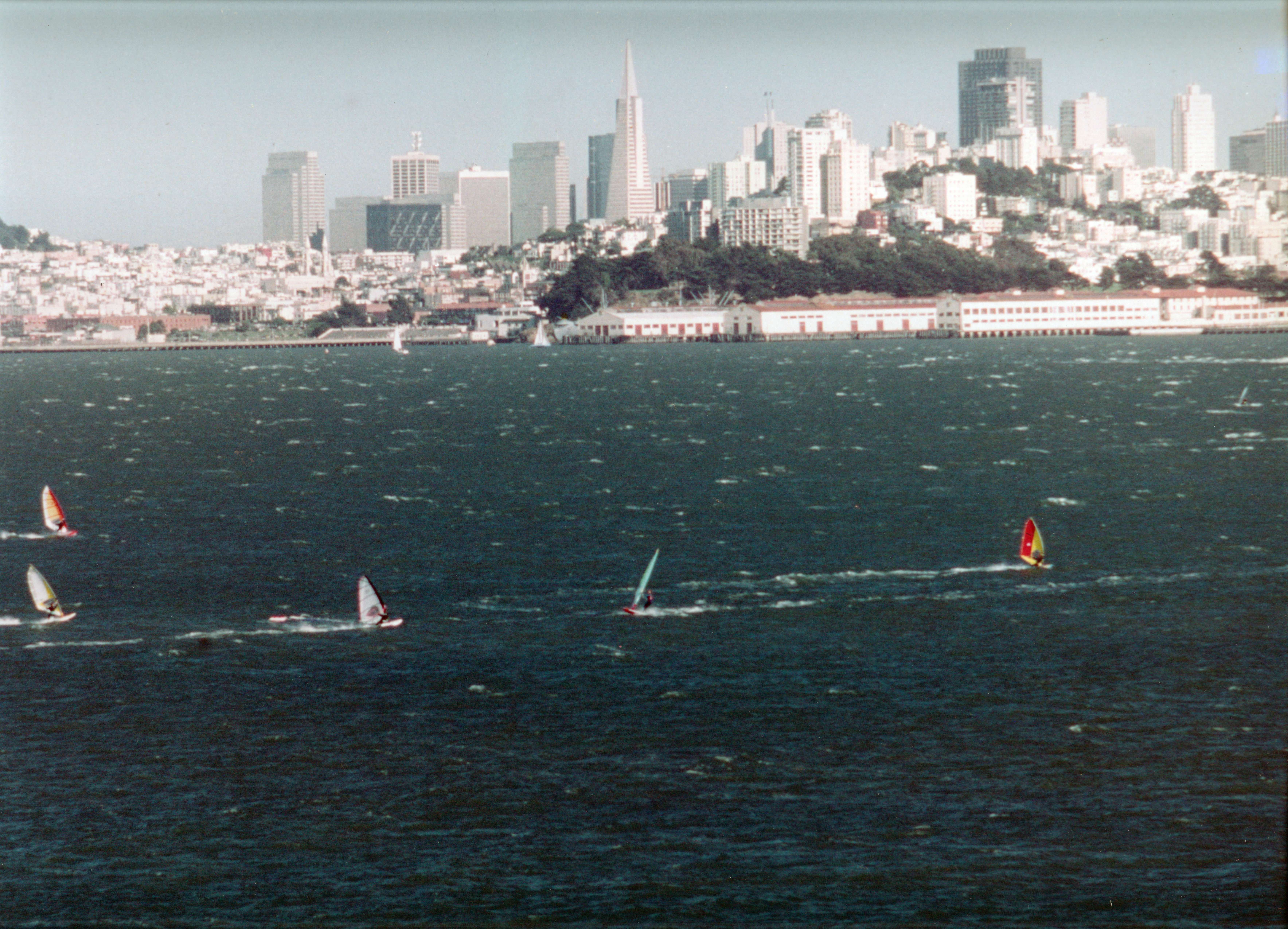
Windsurfing S.F. Bay. That’s me in the middle heading out towards the cruise ship from which my brother, Jim Sullens, took this picture. Certainly, a teachable moment somewhere in there.

As an example, on all of his experiences this teacher records basic weather data (temperature, precipitation, cloud coverage, wind speed and direction) which provides a transition into graphing and analyzing data.  Great idea!  Now I am thinking, hmmm, the ecology aspect of being on the river and the exposure to wildlife and, of course, environmental stewardship are teachable opportunities.  And the dams, the many dams, can provide ample high-powered subject matter.  How about the geology and geography between Montana and Missouri?  And, oooh, the moon phases and constellations?  Hey, what about bringing into the classroom the sights and scenery experienced by Lewis and Clark and their crew, and the Native Americans with whom they came in contact?  My head is spinning with possibilities!

Moonrise (photo by Dom Liboiron)
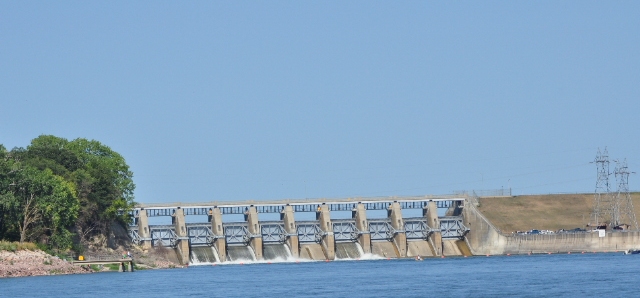
Gavin’s Point Dam (photo by Bob Bellingham)
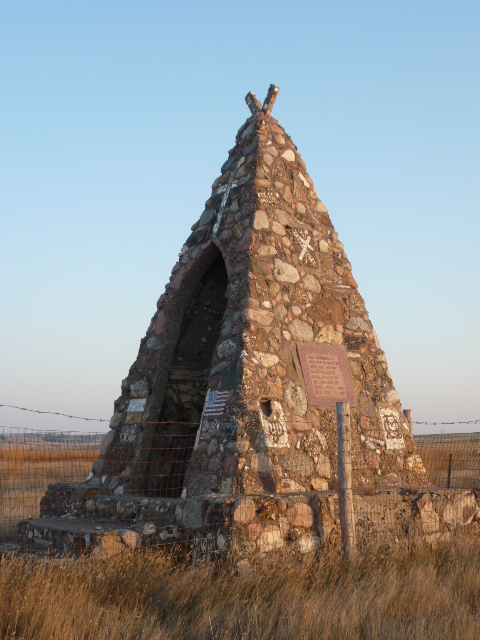
This monument is on Standing Rock Sioux Reservation and is dedicated to two missionaries who worked with the Lakota. It features Christian and Native cultural and religious symbols. The stones also had many fossils imbedded in them. (photo/caption by Dominique Liboiron)

So much food for thought!  If I am not able to have an outdoor classroom, I will strive to bring the outdoor classroom inside.

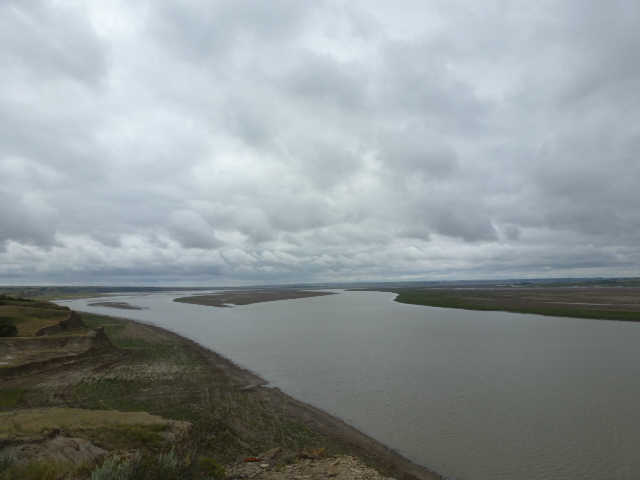
178-mile long Lake Sakakawea, held back by Garrison Dam, home to extremely high winds. (photo by Dominique Liboiron)
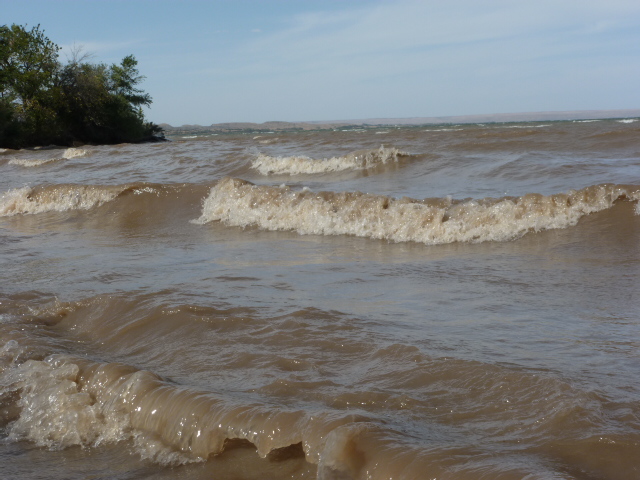
No, it is not the ocean. These are waves produced by winds on Lake Sharpe. (photo by Dom Liboiron)

Yes, I look forward to the solitude, but the simplicity may be more multifaceted than I thought.

If you are reading this, and you have some teachable moment ideas for me to think about on my trip, I encourage you to comment.  Thanks!

Live fast ~ paddle slow

I better get back to my homework.  🙂

THIS is What I’m Talkin’ About!

What Missouri River Relief is talkin’ about.

And DOING!   See more here!

Gotta LOVE these guys!

Self-efficacy: A Blessing or a Burden?

Below Fort Benton. Photo by Norm Miller.

Not a day goes by that I don’t think about my trip down the Missouri River.  Most days, I long for the start day to arrive, even though I still have much preparation left to do.  I think about some of my conversations with Missouri River paddlers, as we visited on their stops at Cooper’s Landing, and the advice to “just go put your kayak in the river and go.”  This simple advice helps me keep the trip in perspective:  just enjoy the paddle and the “country”side.  Of course, there is the challenge, too.  My self-efficacious nature says, “bring it on”!  I absorb every piece of information and all video clips I can find on our Facebook Paddlers pages.  I make note of much advice from Norm Miller, my go-to expert.  I read about paddling expeditions, or expeditions in general, to learn about experiences requiring mental durability, physical stamina, and personal validation for embarking on extraordinary missions.

Thomas Walker, Tyler Ranes and Bob Bellingham passing through Cooper’s and sharing their stories.
Enjoying Mark Kalch’s enthusiasm at Cooper’s during his stop-over.

Expeditions are not for everyone.  But for some, the need to set goals beyond the borders of your box and the zones of your comfort are always within mental range.  In my twenties living in the Sierra Nevada Mountains, my peers and I were always pushing the limits of security by skiing where most people don’t, high up on the mountain tops or across the mountain range.  In my thirties, my peers and I on the coast endeavored to break through windsurfing securities by attempting to sail the uncompromising waves at Ocean Beach and, of course, at the mouth of San Francisco Bay (you DON’T want to break down with an outgoing tide, just sayin’.)  Perhaps it is a matter of insecurity, always striving for the satisfaction of defying your personal limits.  I don’t know.  Perhaps it is growing up with two older brothers and always believing I could do ANYthing they could do.  I once climbed out on a limb of a tree when I was five years old, my brothers watching, undoubtedly on a dare.  The challenge ended with a fall and a mild concussion (maybe that’s it!).  Perhaps it is a love for the wilderness and the need to get access to it.  Part of it HAS to be the challenge.

Mt. Williamson group from Bear Valley in early 80s. Took two days, half of us made it to the summit. Glad we made it safely up, then down.
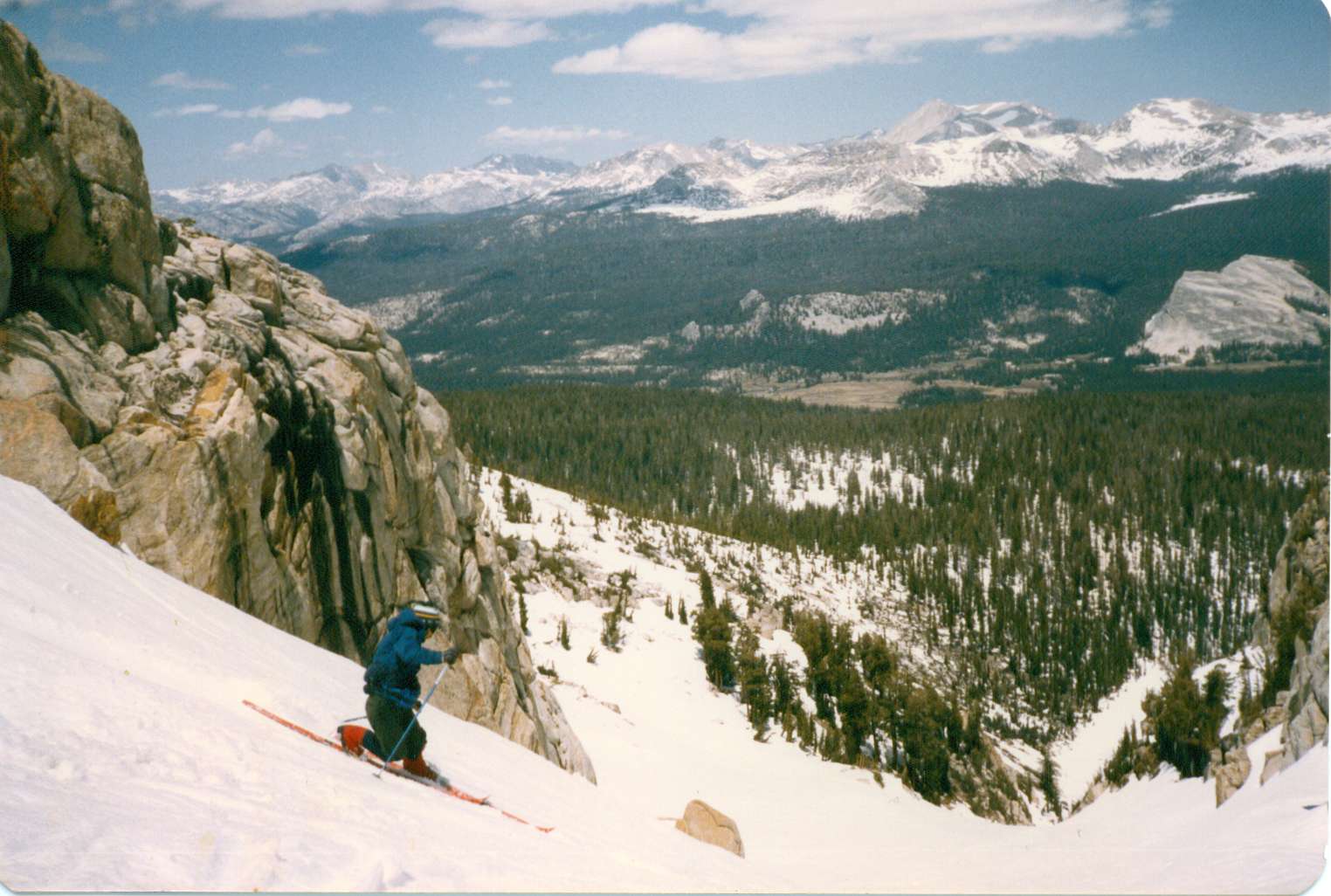
Chute skiing in Tuolumne Meadows, Yosemite (before road opening).
S.F. Bay-sailing with the big dogs.

Self-efficacy:

“People with high assurance in their capabilities approach difficult tasks as challenges to be mastered rather than as threats to be avoided.”
–Albert Bandura

Looking down at the Brower’s Spring drainage (in the middle) from Sawtelle Peak. Photo by Norm Miller.

My mental challenge right now, which I have been confronted with since I committed to this expedition:  where do I start?  Do I make it a river “source” start, which adds 300 miles, two weeks, major expedition conditions (skiing in to Brower’s Spring at 8,800 ft in April?), and access to some incredibly beautiful wilderness, including a wildlife refuge?  Or, do I just put my kayak in the river at the mouth of the Missouri and start paddling?

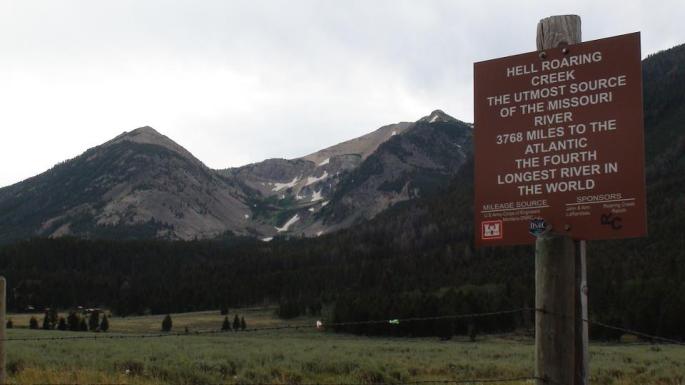
Hell Roaring Creek below Brower’s Spring. This would be a ski or snowshoe stretch (I think 7 miles in and 7 out), not to be paddled.
Norm Miller (left) and Mark Kalch (right) at Hell Roaring Creek below Brower’s Spring, which is back up in the mountains behind them.

Watch Norm Miller’s video of Mark Kalch sharing his experience as he made his way down the stretch from the “source” to the “headwaters” of the Missouri River.  Much of this section leaves little to be desired…  Click here

Mark heading off just below Three Forks. Plenty of incredible wilderness to behold. Photo by Norm Miller.

I can’t help but think I would regret not starting at the ultimate source at Brower’s Spring, being soooo close.  However, the thought of just putting in at Three Forks gives me a more peaceful easy feeling as well as an assurance of some incredibly beautiful wilderness, without the expedition extremes.  Oh, the burden of a self-efficacious nature!  🙂

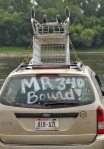
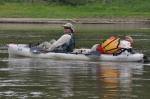
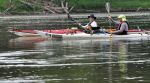
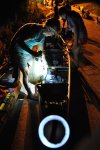
MR340 photos courtesy of Dave Marner, a.k.a. Dave the River Slave

Dave Marner has very graciously given me permission to post his photos of the MR340 (Missouri River 340-mile race).  I have credited each photo to him per his request.  Thanks, Dave!

I hope you enjoy them as much as I have.  They are an outstanding documentation of this very unique and extreme paddling race that began Tuesday July 31 at 7:00 AM in Kansas City, Missouri, and ended Friday  August 3 at 11:00 PM in St. Charles, Missouri.  Every racer is a rock star!

I speak for many giving special thanks to Missouri River Relief and all of the safety boats watching out for all of the racers’ lives.  And, kudos to all ground crews, race personnel, volunteers, and supporters, on the river or at home.  Good job.

MR340-race from KC to STL is all about the River

This is a good interview with race sponsor Missouri American Water’s Kim Hudson this morning in St. Charles:

This event, with over 500 racers this year, is about “thinking about the River and focusing on how important it is to us.”

http://fox2now.com/2012/08/02/mr340-canoe-race-ends-in-st-charles-mo/

Another newsclip from KCTV5 KC

River racers battle water, sweltering heat – KCTV 5#.UBqKh_uRN-U.facebook.

Here is a local article from the Columbia Daily Tribune.  Again, it’s all about the river.  We love our Big Muddy!

Meeting on the MO River


River Relief held an executive staff meeting yesterday to discuss their upcoming “Friendraiser” event next month, and we all gathered on Roger & Barb Giles’ historic sternwheeler, the Joseph M. LaBarge (of whom Barb is a relative!).  Melanie invited me with the hope that we would have a chance to brainstorm expedition ambitions.

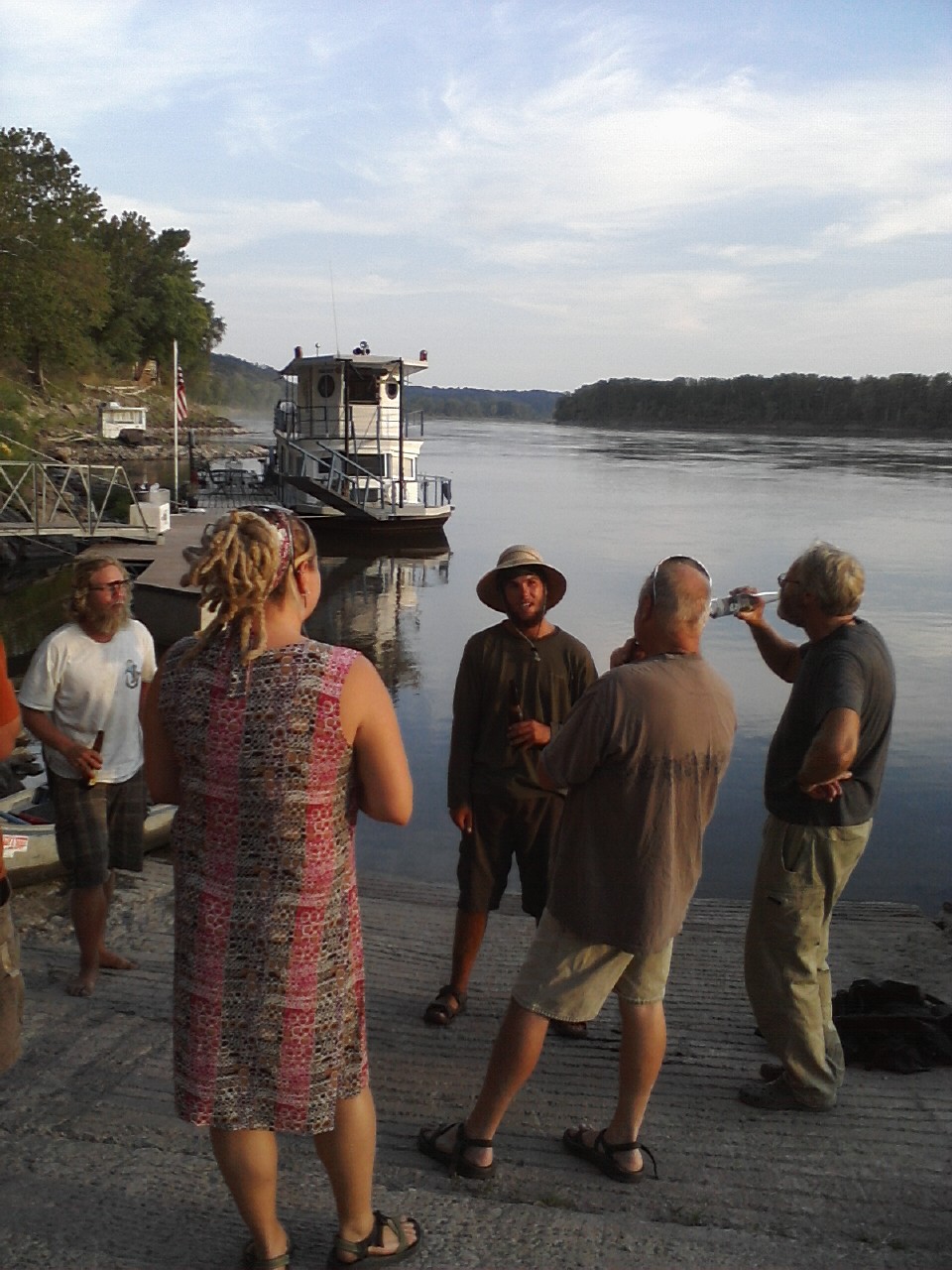
The Joseph M. LaBarge at Cooper’s Landing

Well, it may be too early to discuss details for the trek, particularly since River Relief is in the process of developing an extensive

Education Program for next year, hopefully, if they can acquire the support they need.

They also have a vision for a MO River Action Team program in which communities up and down the river can become Stream Team leaders in the sustainable stewardship of their own areas.  What a great idea!  River Relief is the ideal role “model.”  After eleven years of assisting stream teams throughout the Midwest, River Relief wants to focus on developing a secure base camp in mid-Missouri, building reliable and enduring relationships within our local communities.

What vision!!  Now, THAT’s what I’m talkin’ about!  Exciting.