Three Cheers, Dominique! Victory in New Orleans!

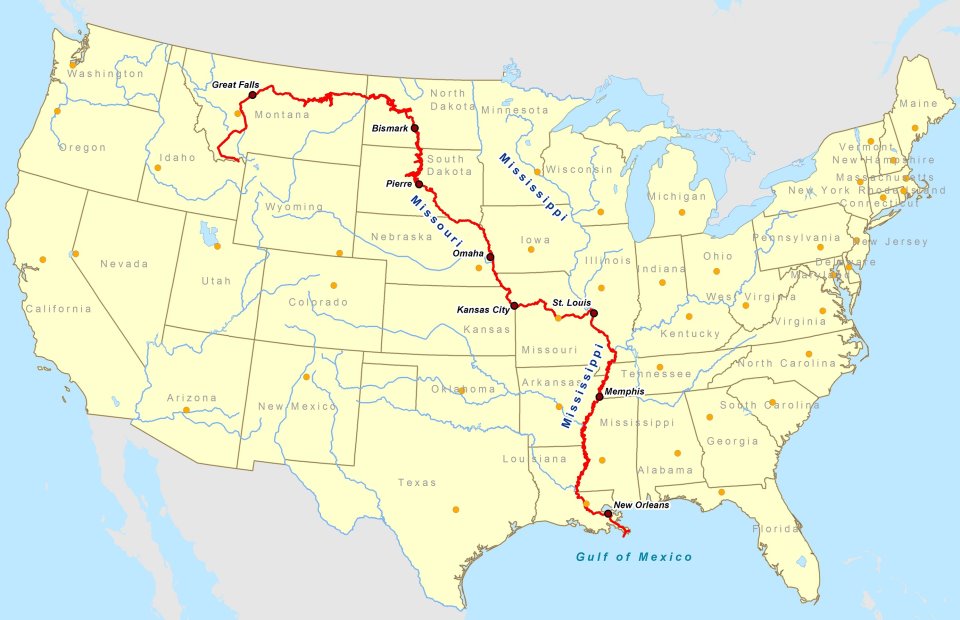
Congratulations to DOMINIQUE LIBOIRON for his arrival in New Orleans after paddling – in a CANOE – from the Canadian province of Saskatchewan through 13 American states and along four major rivers, including the Missouri River and the Mighty Mississippi, over 3,000 miles.

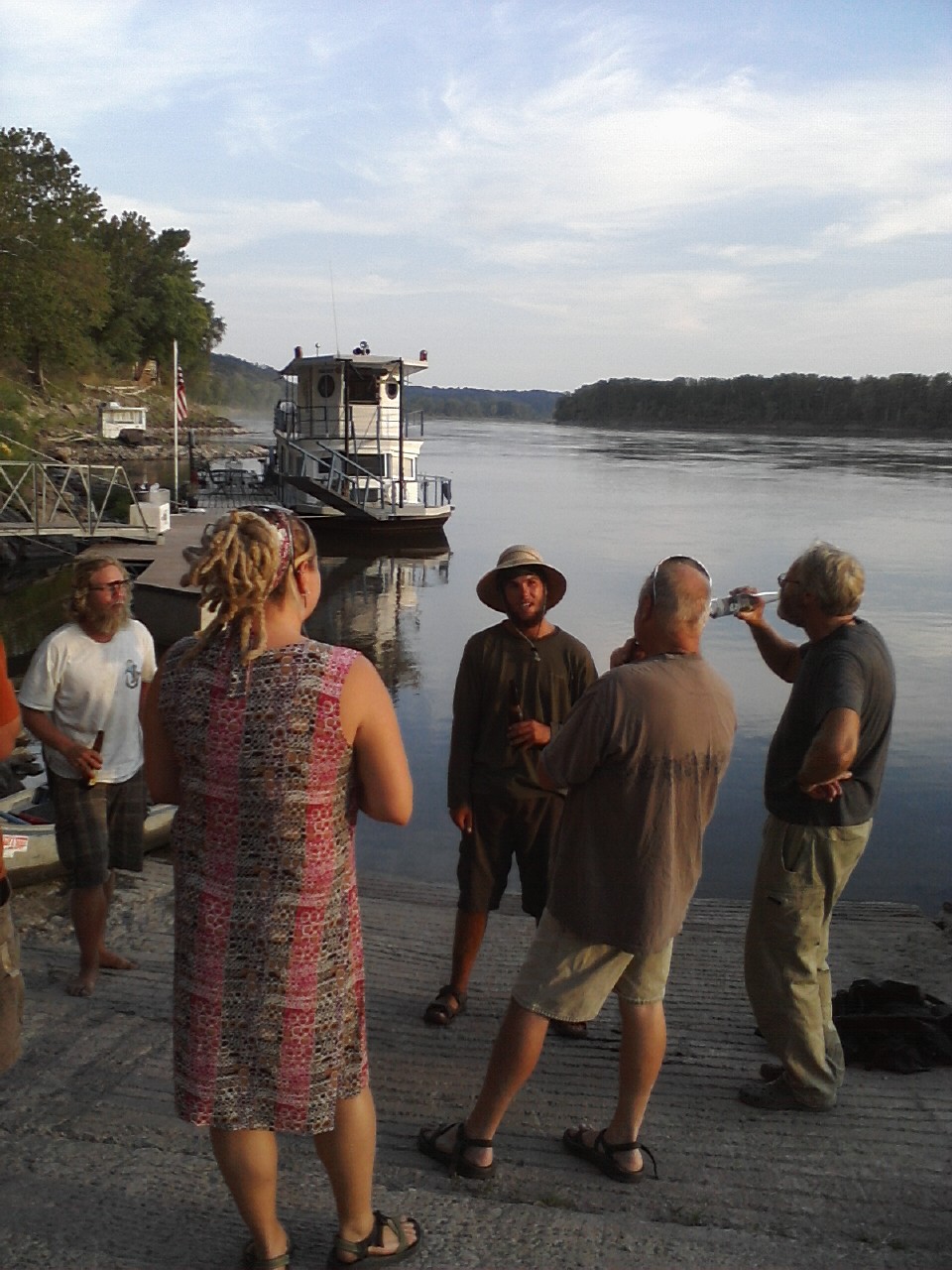
Dominique endeared himself to those of us at Cooper’s Landing, MoRiv mile 170, where he spent a couple of days to rest up and elude a storm, just days before the holidays began.

2012_Dominique

Check out his web site at www.canoetoneworleans.com, or his FB site of the same name, to find out more about his mission, ambition, and victory! THREE CHEERS, DOMINIQUE!!! Well done, my friend! xoxo

New Motto: Go With The Flow!

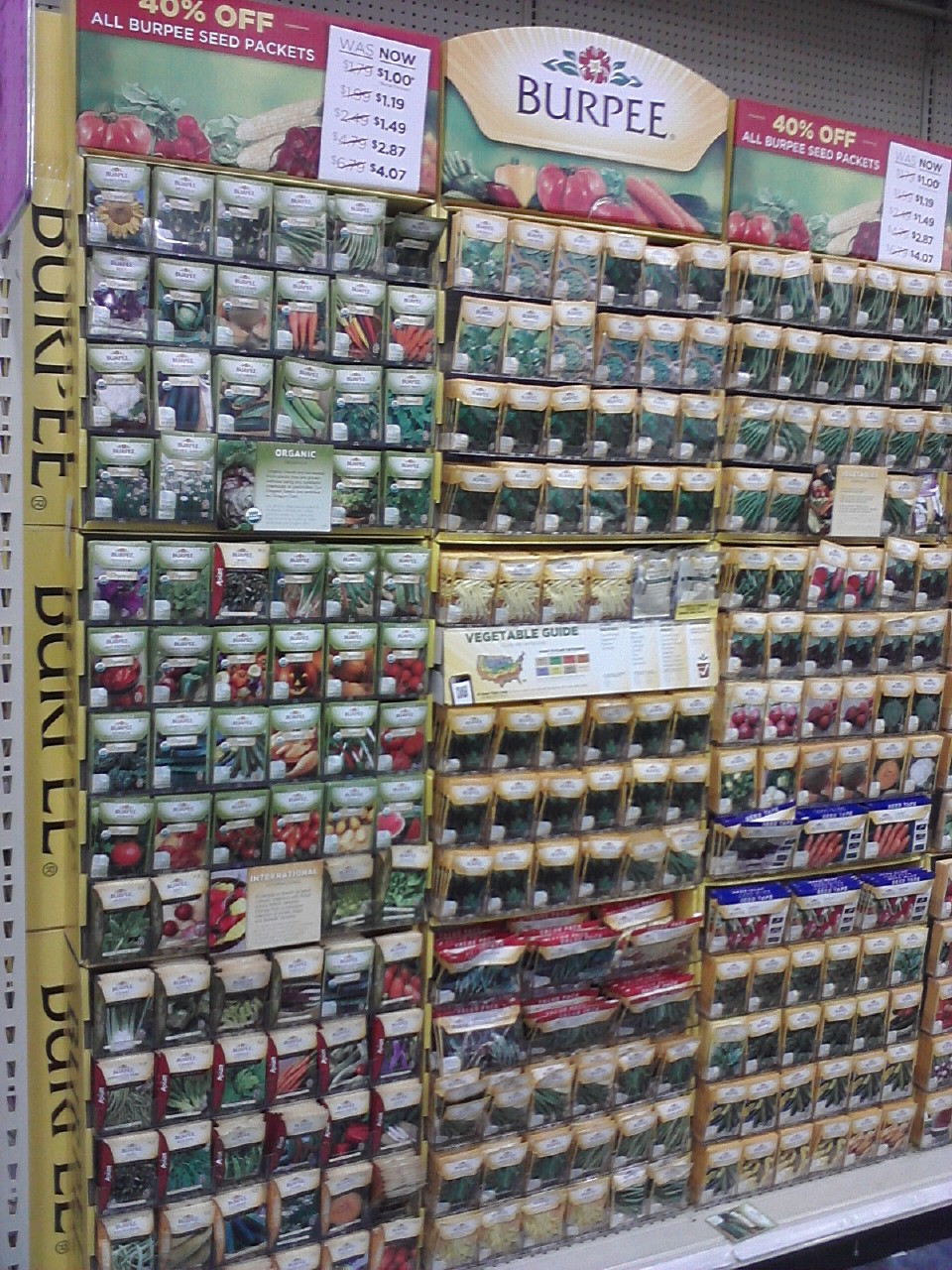
The seed displays are out at the stores, and that can mean only one thing:  SPRING is right around the corner!!  So, WOW, it will be time to go soon.  Am I nervous?  Sometimes yes, and sometimes yes.

seeds_1-28-2013

And, speaking of seeds, I have a crazy idea to grow some leafy greens on the trip.  I mean, 3 ½ months on the river?  Some leafy greens would be nice.  That said, the planting season in Montana doesn’t start until the first two weeks in June.  My little portable terrarium might be ideal for some early planting!  I have been brainstorming the perfect container for such a thing and currently have narrowed the choices down to a couple of good ones.  Any suggestions out there?  I’ll take them.

MichaelClark_kayanoeStand

Today, I am going to build a “kayanoe” cradle for my kayak.  The design is Michael Clark’s of Big Muddy Adventures.  I took a picture while there so that I could build a set just like his.  Once complete, I can lay my boat in it and get started removing the keel strip that needs replacing, and install the rudder.  Eddyline Kayaks gave me a new strip to apply, and I am to call them when ready to put it on.  Today is supposed to be 70 degrees, so I have picked up the lumber and will begin cutting wood this afternoon.

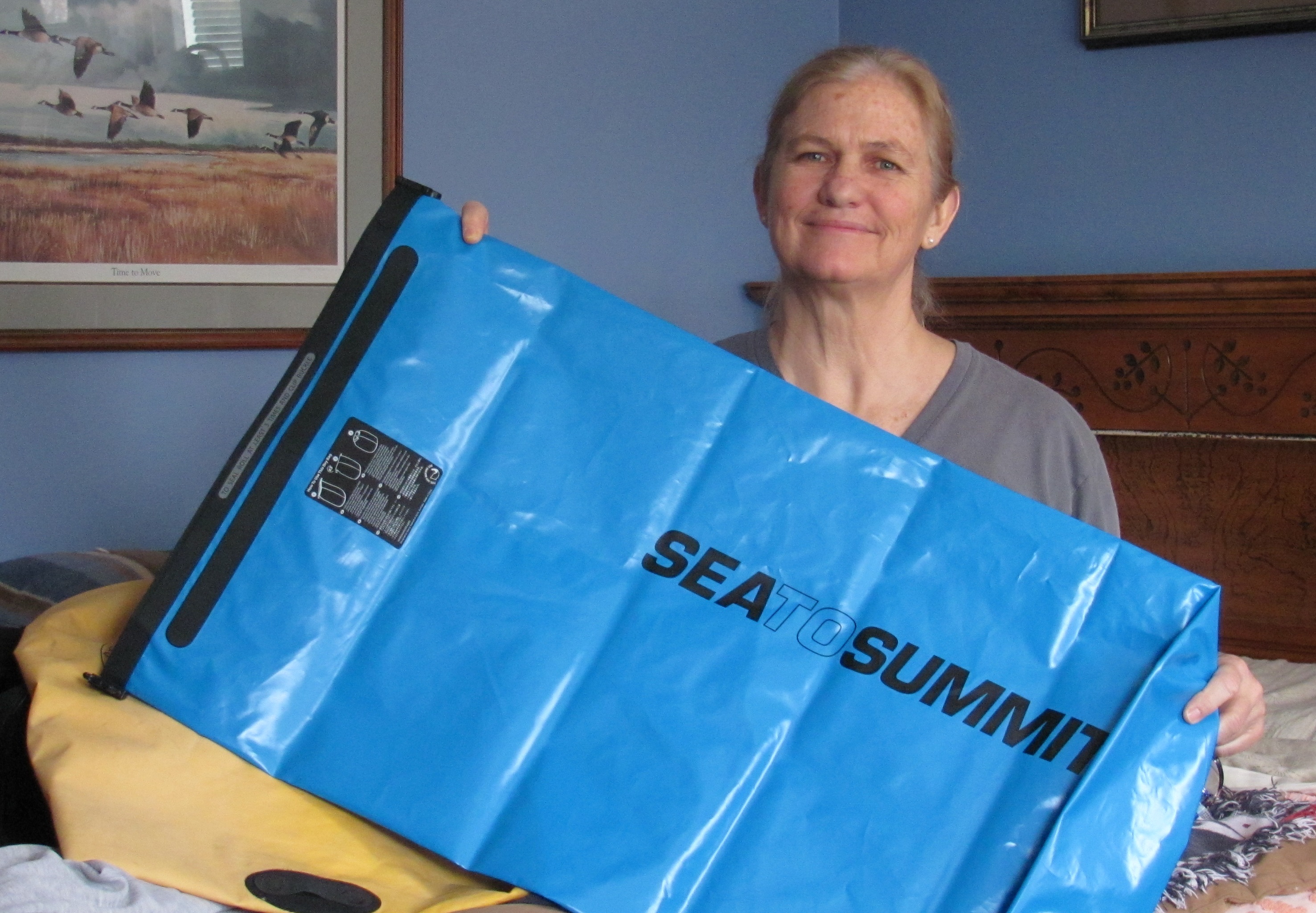
Thanks to Steve Schnarr and Melanie Cheney, my new neighbors and humble managers of Missouri River Relief, for the use of their large detached garage and electrical power.  Another HUGE THANKS to them for giving me a dry bag.  And Maryellen Self, THANK YOU, GIRL, for purchasing a new large dry bag for me from Sea to Summit.  I am very grateful for all of your generosity.

2_Maryellen_drybag_crop
Thank you, Maryellen! Maryellen is a Kentucky kayaker and enthusiastic supporter.

Bill West of Red Rock Lakes National Wildlife Refuge, located in the Centennial Valley just below Hell Roaring Canyon (the route to Brower’s Spring), sent me a link in which one can look up current snow depth Lakeview Ridge Snowtel Site  as well as historical data from years past (also mentioned in a previous post).  This will help me determine how much snow is in the area, and if we can drive up to the base of Hell Roaring Canyon, where it appears as though we will have to ski in the seven miles to Brower’s Spring, and out again.

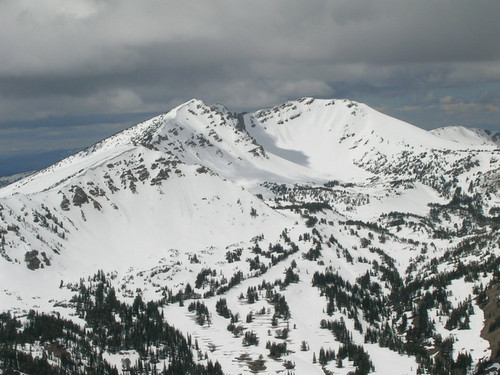
SawtellePeak_web
Sawtelle Peak Road

The lookout road on Sawtelle Peak will undoubtedly be snow-covered and we have no way of getting up the switchbacks in order to ski over to Brower’s Spring.  [Unless someone out there has snowmobile contacts in Montana, Idaho, or Yellowstone…??  Helicopter ride?  Of course, it would have to be an in-kind donation :)]

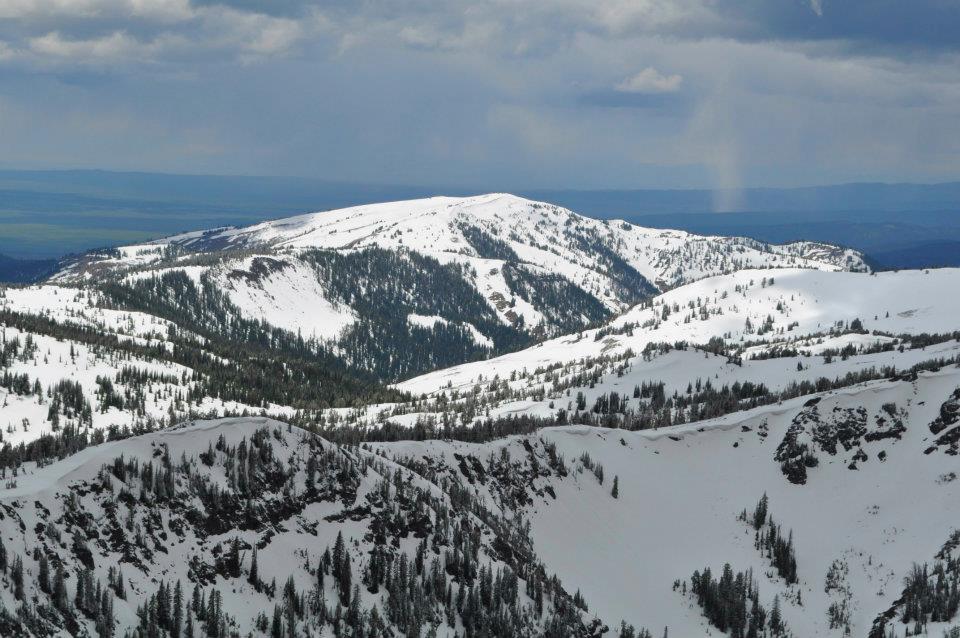
The Rock Creek basin area on Sawtell's west side.  Hell Roaring Canyon would be south of here and off to the left.
The Rock Creek basin area on Sawtell’s west side. Hell Roaring Canyon, and Brower’s Spring, would be a little south of here and off to the left. (Wow, I’m seeing some good backcountry skiing in this photo.)

These photos of Sawtelle Peak were taken from the website SummitPost.org

The following photos are taken from the Refuge Virtual Tour site that is not yet official.  Bill Smith provided me with this link as well.  You really should check it out.  James Perdue has some gorgeous photos on that site.

Trumpeter Swans (photo by James N. Perdue)
Trumpeter Swans
(photo by James N. Perdue)
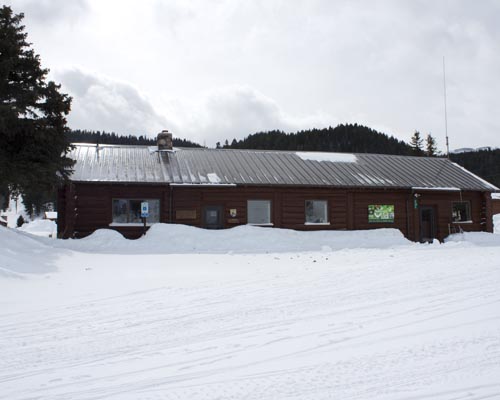
HQSnow_112184
Headquarters at the Red Rock Lakes National Refuge (Photo by James N. Perdue)
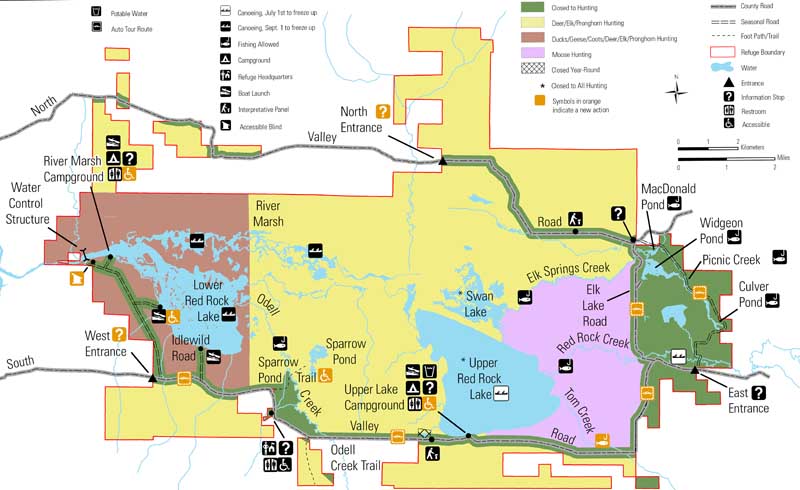
publicMap
Hell Roaring Canyon is off to the East, or right, of this map, up Centennial Valley. The road I will hopefully bike ride down snow free runs along the bottom of this map.

Down in the Centennial Valley, the upper and lower lakes in the refuge will more than likely be frozen until May, so I am planning on riding a bike from Hell Roaring Canyon down to Clark Canyon Reservoir.  The road follows right alongside the waterway.  The ride will be approximately 80 miles.  Praying that the road into that area is free of SNOW and not muddy sloshy.  Plus, we REALLY need to be able to drive up to the base of Hell Roaring Canyon.  The snow data link that Bill sent me is my life-line to the start of my expedition.  In 2012 on April 20, the area had 11 inches of snow.  In 2011 on April 20, the area had 47 inches of snow, nearly four feet!  What will 2013 have in store for us???

South Valley road in winter is often only passable using a snowmobile. This is looking east into the refuge. Lakeview is in the distance. (photo by James N. Perdue)
South Valley road in winter is often only passable using a snowmobile. This is looking east into the refuge. Lakeview is in the distance.
(photo by James N. Perdue)

My new motto for the expedition:  GO WITH THE FLOW!

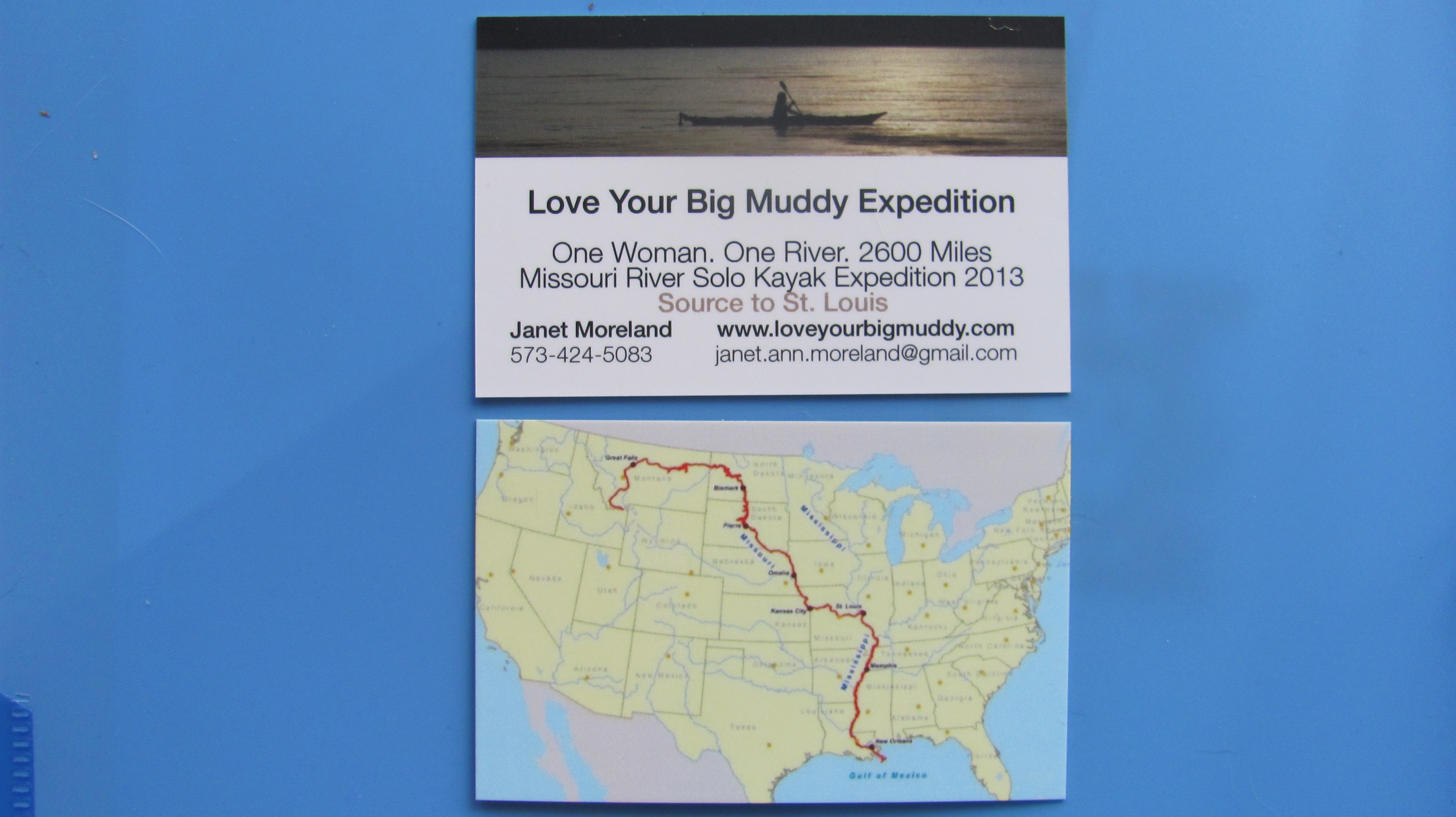
My new expedition cards

A draft of the promotion video will be sent to me on Friday.  My new expedition cards came in last week, and I have a new batch of stickers with a larger web address for bumpers.  Did I tell you about my terrarium?  Crazy, I know.  However, having something that is alive to take care of may be good for the soul.  We’ll see.  Nothing is set in stone.  Heck, I may not have room.  I am just going to GO WITH THE FLOW!  🙂

Cheers, Janet

Stickers, Business Cards, and….T-Shirts?

I am getting ready to order some more stickers.  They seems to be quite popular.  I should be selling them, but I just love to give them away.  Maybe I’ll become more disciplined with the second round.  But, who can resist when you see pictures like this???

Sticker-3AwesomeGuys

These handsome guys are stealing the thunder from my good looking stickers, don’t you think?  L-R, Dave Cornthwaite, Rod Wellington, and Dale Sanders.  If you have a few minutes (hours) and a cup of coffee (several), kick back and watch these three in the bike car adventures.  Sure-fire entertainment, no joke.  Here is the link to Dave Cornthwaite’s Bikecar Expedition 2012: The Highlights 

Good fun, guaranteed!

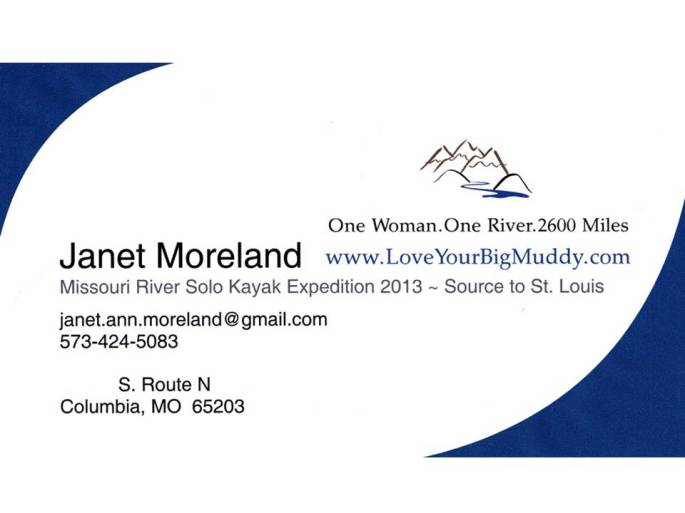
I also had fun designing business cards.  I have 250 on order from freelogodesigns.  Check them out, they’re friendly folks.  Here is my first round business card design (address removed for web posting):

card edited for web
Hard to see it here, but I like the way the mountains are brown with the blue river flowing out.  I think the ‘one woman’ line is brown and then the web address is blue.  If I only had a map of the route on the back.  I may add that with an address label.  We’ll see if it works.

I would love to have t-shirts.  Maybe I can mock something up for next post.

Lots to do.

Well, here is the result of my playing around:

t-shirt_draft2Thought, comments, suggestions?  Still need something for the front.  Or, should this go on front?  Hmmmm.

The Inspiration of the Coppermine Expedition

Check out The COPPERMINE EXPEDITION 2012.  I can see a ton of parallels to my vision, which is on a smaller scale but same big idea:

Coppermine_New Project 1 0305

The Expedition

Statement of Objectives
The proposed expedition will take six participants from Yellowknife, N.W.T. to Kugluktuk, NU, by canoe and develop educational materials to bring the journey to Canadian classrooms. In pursuing this opportunity, expedition members wish to further develop their careers as educators in combination with a passion for outdoor and experiential education. In doing so, we hope to be able to contribute in a positive manner to the understanding and appreciation of Canadian history and geography through various forms of media. Our objective is to expand the geographic appreciation, and knowledge of this remote region of the Canadian wilderness, encouraging thoughtful debate and discussion on both environmental and
economic themes.

In support of the Royal Canadian Geographical Society’s mandate to make Canada better known to Canadians and to the world, while on the expedition, we will be creating a series of interactive lesson plans for classrooms. We will be submitting these to the Canadian Council for Geographic Education, and upon completion of the trip, these lesson plans will be made available through this website. Students and teachers will be able to explore the route and find a range of materials appropriate to their grade level.

Coppermine_New Project 1 2180

From Canoe and Kayak Magazine:

Coppermine 2012

An ambitious 1,000-mile odyssey across the Canadian North

By: / Posted on June 18, 2012

Why is it important that young Canadians learn about this part of their country?
Stef Superina: Canada’s north, its rich history and diverse geography, are all too commonly skipped in our history textbooks. As a country that derives much of its wealth from natural resources, the Canadian north will play an important role in our country’s growth. Engaging our youth in discussion on economic and environmental themes is integral to the sustainable development of our country’s resource base, as they will ultimately become the decision makers of the future.

I think I said somewhere:  The Missouri River, its rich history and diverse geography, is all too commonly skipped in our history textbooks.  Well, maybe not those exact words, but in similar concept.

New Project 1 0023

How cool it would be to have support from a geographical society!?  But then, I’d need a crew.  Then, it would no longer be a solo trek.  Then, it would be an occupation, and I’d never make it to the classroom with the children.  Being in the classroom with the children is important, too.  I will just have to make do with less support, and more creativity, resourcefulness, and energy.  And, perhaps, a Coppermine will help.  (…and a really good camera!)

Coppermine_New Project 1 2418

Let the adventure begin! | Mizzou Wire | University of Missouri

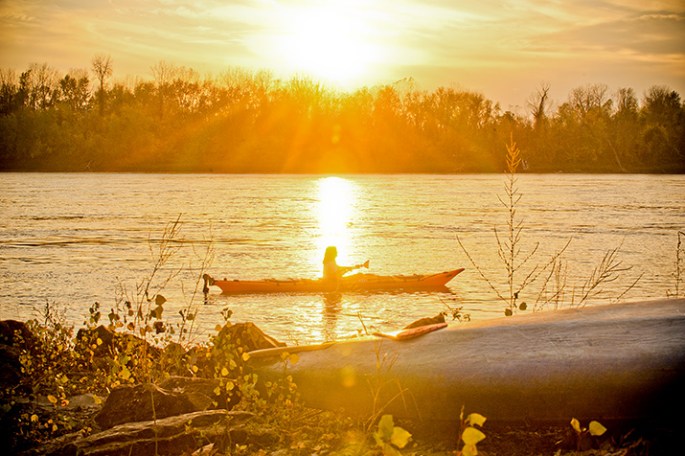
Sunset on the Missouri River, Cooper's Landing, Columbia, MO

Let the adventure begin! | Mizzou Wire | University of Missouri.

Let the adventure begin!

New Mizzou graduate plans record-setting kayaking expedition

  • Story by Nancy Moen
  • Photos by Shane Epping
  • Published: Dec. 7, 2012

December Mizzou graduate Janet Moreland plans to make history on a solo kayaking expedition this spring — and hopes to incorporate her adventures into a middle school curriculum. She’s equipped with 16 years of kayaking experience and a brand-new bachelor’s degree from the MU College of Education.

At 56 and with a new bachelor’s degree from the MU College of Education, one nontraditional student leaves Mizzou to pursue an adventure she’s been dreaming of for years. In May, Janet Moreland will embark on a solo kayaking expedition of the Missouri River from its headwaters at Three Forks, Mont., to St. Louis, a 2,320-mile span of paddling and portaging.

Moreland hopes to become the first woman to navigate that length of the Missouri River solo by kayak and to use the expedition as a teaching tool for social studies and science classes. She views the river as a “living laboratory” for teaching middle-school students about cultural history, geography, the natural environment and social interactions.

Just the thought of the approaching adventure wakes her up at night. “Maybe I’m an adrenalin junkie,” Moreland says.

Moreland’s journey will take three months, far less time than the 20 years she invested in working on a bachelor’s degree in education.

Extreme journey

Moreland has been training for her river adventure for years. The self-described river rat has been kayaking for 16 years, with nine of those on the Missouri River. She runs two miles every other day and has been jogging most of her life.

Moreland will need mental endurance as well as physical stamina to be on the river for days on end. As lonely as the expedition seems, Moreland will find support from a network of kayakers.

There will be fishermen, boaters and towns along the way, but Moreland could spend 10 days to two weeks on the river with no sign of civilization. She says solitude doesn’t bother her; she once lived alone in a house on 220 acres: “I’ve always been extremely independent. The solitude is something I look forward to.”

The tradeoff is the extraordinary beauty she’ll experience. The first 300 miles of the expedition will be engagingly scenic, and if she’s paddling on a cloudy night, light from the towns will reflect off the clouds to show her the way.

But the seven to nine big lakes along the route will offer challenges. One of those lakes is 230 miles long. Moreland’s major concern, however, is wind. Gusts along the river can reach 70 miles an hour, and if the winds are too strong, she’ll need to paddle at night when they die down.

Moreland caught the lure of extreme kayaking seven years ago after meeting paddler Dave Miller, author of The Complete Paddler. Miller had stopped for breakfast at Cooper’s Landing on the Missouri River, where Moreland cooked on Saturday mornings.

She was further hooked after another paddler, Norm Miller of Montana, said he believed she could be the first woman to kayak the entire length of the river solo. In 2004, Norm Miller (no relation to Dave Miller) paddled and hiked the Lewis and Clark route.

Janet MorelandIn September Moreland retired from her job in the MU Sustainability Office. A longtime environmentalist, Moreland thrives on outdoor adventures.

Wilderness and wildlife

Moreland will take an assortment of essential supplies for her journey, and she’ll refresh her two-week food and water supply in the river towns.

She’ll pack an expedition tent that can handle wind, a cook stove, a two-wheel trailer to portage her kayak around the dams, a sleeping bag, warm clothes and boots. She’ll take a flint stone as an emergency fire starter and a hatchet for chopping firewood, building windbreaks and cutting her way through river brush and vegetation.

She’ll keep bear spray on hand for any encounters with grizzly bears.

Because cell phone service will be scarce, she’ll use a laptop to post blogs and update her journal, forming the basis of a book she plans to write. A video camera attached to her kayak will capture images.

Moreland’s students and the public can follow her adventures at loveyourbigmuddy.com.

Trailblazing teacher

“Life is a journey. Live fast. Paddle slow,” sums up Moreland’s philosophy of life and love of adventure. Her goal as a teacher is to show students that it’s possible to follow their dreams, even those dreams considered out of reach.

“Children need to learn to believe they can make things happen they didn’t think were possible, and I want women to know that, too,” she says.

A lifetime of challenges that would test any adventurous spirit has seriously overqualified Moreland for extreme adventure.

She lived alone in Hawaii in the most remote part of the island and in Yosemite National Park. She worked as the first certified female member of a ski patrol in California’s Sierra Nevada Mountains, routinely doing avalanche control with dynamite and sometimes “under-the-rope” skiing on unpatrolled slopes.

She taught wind surfing and tried skydiving. She worked as a commercial salmon fisher in Southeast Alaska and as a carpenter in Bear Valley, Calif., repairing snow-damaged houses and, with two other carpenters, building a redwood house “from the ground up.”

Moreland’s quest for an education degree began in San Francisco, when her daughter, Haley Rose, was in preschool. Attending college part time, Moreland took classes here and there, fitting course work between moves, jobs and family responsibilities.

She moved to Columbia in 1996 after two years in Springfield, Mo., and, in 2005, decided to get serious about a Mizzou degree while working at the university. She retired recently from the Sustainability Office, where she worked on MU’s projects in environmental responsibility.

Her interest in kayaking developed after she learned her house was just down the road from the Missouri River. She drove to Coopers Landing and discovered the river.

“All of a sudden Columbia became home for me,” she says.

Teachable moments

Moreland plans to use her solo kayaking adventure as the basis of a curriculum on river sustainability and stewardship, as well as to build self-esteem in adolescents.

She’s greatly appreciative of and works locally with Missouri River Relief, a volunteer nonprofit organization dedicated to the health of the Missouri River. The organization connects children, teachers and the public to the Missouri River through clean-up activities and educational events.

Partly because of that group, the Missouri River is an “incredibly clean, beautiful wilderness waterway,” Moreland says.

Moreland’s river explorations will continue after she completes this summer’s expedition. She plans to paddle down the Mississippi River, from St. Louis to New Orleans, in summer 2014.

Moreland completed a student-teaching internship during the fall semester at Jefferson Junior High School. She will work as a substitute teacher for Columbia Public Schools in spring semester, while applying for a permanent position after her adventure.

Wilderness Classroom…can you say, “Totally Awesome!”

Dave and Amy are on a three year kayak/canoe/dog-sledding expedition around North America, bringing the wilderness into the classrooms of 65,000 school children and 1900 teachers.

Currently delayed on their North American Odyssey, which they began on Earth Day in 2010, they were scheduled to present at the New Jersey Kayak shop right before Hurricane Sandy hit.  They presented to a small audience, and then got outta there.  The shop suffered damage, but their kayaks were waiting for them, tied up in front, when they returned from evacuation.  They are staying in New Jersey for awhile to assist with the hurricane relief before heading down the east coast to Key West.

Check out their introductory video here, their blog, and their Facebook page to see exactly what they are doing.

Very cool.  Enjoy!

Self-efficacy: A Blessing or a Burden?

Below Fort Benton. Photo by Norm Miller.

Not a day goes by that I don’t think about my trip down the Missouri River.  Most days, I long for the start day to arrive, even though I still have much preparation left to do.  I think about some of my conversations with Missouri River paddlers, as we visited on their stops at Cooper’s Landing, and the advice to “just go put your kayak in the river and go.”  This simple advice helps me keep the trip in perspective:  just enjoy the paddle and the “country”side.  Of course, there is the challenge, too.  My self-efficacious nature says, “bring it on”!  I absorb every piece of information and all video clips I can find on our Facebook Paddlers pages.  I make note of much advice from Norm Miller, my go-to expert.  I read about paddling expeditions, or expeditions in general, to learn about experiences requiring mental durability, physical stamina, and personal validation for embarking on extraordinary missions.
Thomas Walker, Tyler Ranes and Bob Bellingham passing through Cooper’s and sharing their stories.
Enjoying Mark Kalch’s enthusiasm at Cooper’s during his stop-over.

Expeditions are not for everyone.  But for some, the need to set goals beyond the borders of your box and the zones of your comfort are always within mental range.  In my twenties living in the Sierra Nevada Mountains, my peers and I were always pushing the limits of security by skiing where most people don’t, high up on the mountain tops or across the mountain range.  In my thirties, my peers and I on the coast endeavored to break through windsurfing securities by attempting to sail the uncompromising waves at Ocean Beach and, of course, at the mouth of San Francisco Bay (you DON’T want to break down with an outgoing tide, just sayin’.)  Perhaps it is a matter of insecurity, always striving for the satisfaction of defying your personal limits.  I don’t know.  Perhaps it is growing up with two older brothers and always believing I could do ANYthing they could do.  I once climbed out on a limb of a tree when I was five years old, my brothers watching, undoubtedly on a dare.  The challenge ended with a fall and a mild concussion (maybe that’s it!).  Perhaps it is a love for the wilderness and the need to get access to it.  Part of it HAS to be the challenge.

Mt. Williamson group from Bear Valley in early 80s. Took two days, half of us made it to the summit. Glad we made it safely up, then down.
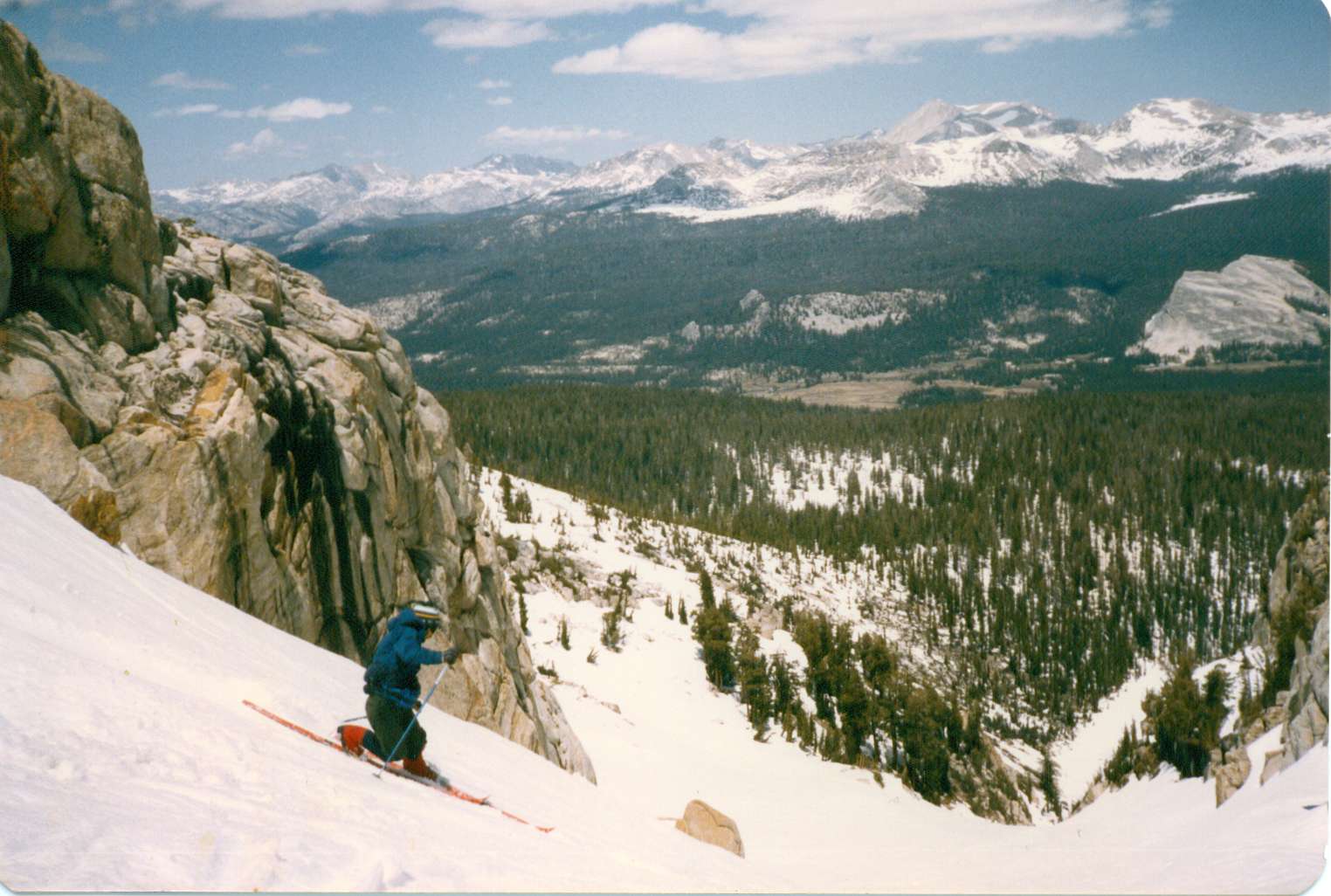
Chute skiing in Tuolumne Meadows, Yosemite (before road opening).
S.F. Bay-sailing with the big dogs.

Self-efficacy:

“People with high assurance in their capabilities approach difficult tasks as challenges to be mastered rather than as threats to be avoided.”
–Albert Bandura

Looking down at the Brower’s Spring drainage (in the middle) from Sawtelle Peak. Photo by Norm Miller.

My mental challenge right now, which I have been confronted with since I committed to this expedition:  where do I start?  Do I make it a river “source” start, which adds 300 miles, two weeks, major expedition conditions (skiing in to Brower’s Spring at 8,800 ft in April?), and access to some incredibly beautiful wilderness, including a wildlife refuge?  Or, do I just put my kayak in the river at the mouth of the Missouri and start paddling?

Hell Roaring Creek below Brower’s Spring. This would be a ski or snowshoe stretch (I think 7 miles in and 7 out), not to be paddled.
Norm Miller (left) and Mark Kalch (right) at Hell Roaring Creek below Brower’s Spring, which is back up in the mountains behind them.

Watch Norm Miller’s video of Mark Kalch sharing his experience as he made his way down the stretch from the “source” to the “headwaters” of the Missouri River.  Much of this section leaves little to be desired…  Click here

Mark heading off just below Three Forks. Plenty of incredible wilderness to behold. Photo by Norm Miller.

I can’t help but think I would regret not starting at the ultimate source at Brower’s Spring, being soooo close.  However, the thought of just putting in at Three Forks gives me a more peaceful easy feeling as well as an assurance of some incredibly beautiful wilderness, without the expedition extremes.  Oh, the burden of a self-efficacious nature!  🙂

Let’s see, where do I begin?

Below Three Forks (photo by Norm Miller)

Okay, where do I begin?

Do I start at the Missouri River’s source, Brower’s Spring, or do I start at the Missouri River’s mouth, Three Forks, where the Jefferson, Madison, and Gallatin Rivers merge to become the mighty Missouri?  Approximately 300 miles separates the ultimate source and the river’s official mouth, and about 10-12 days of paddling.  At one time, with all due ignorance, I pictured that 300 miles to be pristine Montana wilderness, kayaking through isolated Rocky Mountain Wilderness on a sweeping clear water creek, just me, the mountains, and the wildlife.  Not so, I have learned.  Here is Mark Kalch’s account of paddling from the source at Brower’s Spring to Three Forks:

The Red Rock River issues forth from the lake and winds endlessly and listlessly out of the valley. Snaking back on itself time after time with negligible flow meant forward movement out of the area was slow. A coyote wandered to the river’s edge to investigate my kayak and I. His boldness surprised me. Cattle followed me along the river’s meander. Slowly, slowly I carried on.

On to Lima Reservoir the wind picked up and forced an early camp. Overnight my tent was buffeted by its strength. Across the still body of water and a short portage later I once more hit river. Now things hit up a gear. The river, narrow, shallow but running super fast was an interesting encounter. Trees fallen in the water loomed as sweepers and strainers. Turning a 17 foot kayak on a fast corner in an 18 foot wide river takes some doing. Soon man made his presence felt. Fences, of barbed wire and electric lurked in possibility around every corner. Out of my boat, dragging under the lower wire, submerging myself in the icy water, back on board and away again. Repeat for days at a time.

The river finally spewed onto Clark Canyon Reservoir, much to my relief. Another crossing and dam portage on to the Beaverhead River. Now wider, flowing fast, this river looked the part. Appropriately, fisherman now lined it’s banks in drift boats and suited in waders. A quick heads up alerted them to my presence. Non-plussed about my appearance the immediately returned to their labour. Just one guide questioned me – “You headed to New Orleans?”. My reply had him genuinely stoked!

The Beaverhead wound it’s way to Dillon and on to the small town of Twin Bridges. At times beautiful and peaceful, at others endless ranches, cattle and excrement runoff. But it was all about to change. 20 minutes paddling beyond Twin Bridges, the Big Hole River enters from river left. Behold, the formation of the Jefferson! Truly, one of the most beautiful paddling experiences I have ever had. If only the past week could have been so. The river, lined with forest, the water running deep and swift. Now this is a river journey. Alas, it was over all to quickly. In no time with a final hard push I approached the town of Three Forks. A few miles beyond the Madison joins the Jefferson from river right. A few minutes later, the Gallatin as well. A hundred feet beyond, a boat ramp and now this river which issued forth from a snow choked spring had finally become the mighty Missouri! The first, difficult, demanding and ultimately tiny stage of my river descent was complete. With a root beer in one hand and pizza in the other I was tired but happy. Time for a resupply and washing of muddy clothes. In a couple of days it is back on the water and to the sea I go. I am ready.

This is Mark Kalch just below Three Forks (photo by Norm Miller).  I think this looks like a fine place to start.  Yep.

Mark is paddling seven rivers on sever continents.  You can follow his adventure here:

http://www.7rivers7continents.com/lake-it-or-not/

Rod Wellington is also paddling seven rivers on seven continents.  You can follow him on his Facebook page here:

https://www.facebook.com/rod.wellington.9

And, Bob Bellingham is paddling from Three Forks to St. Louis and will be passing through Cooper’s Landing in about a week.  You bet I’m going to pick his brain.  He knows.  You can follow his blog here:

http://www.steadypaddling.com/

Then again, Norm Miller got me thinking about a bike/hike to the town of Dillon, then put in.  I understand the Jefferson River below Twin Bridges is gorgeous.  sigh…

Good stuff on this DNR webpage

http://www.dnr.mo.gov/water-trail/riverhistory.htm

On my way

I am ready to get the ball rolling in high gear.  My website will be developed enough to post for public in the next couple of days, I’m hoping, which is necessary before I can start contacting potential sponsors.  I am having trouble sleeping at night thinking about all the things that need to be done.

I am meeting with Missouri River Relief on Sunday to discuss the trip and our relationship in it together.  That will be a big step.  Last week I filled out a couple of website contact portals.  The initial one was to National Park Service, who claimed to be looking for projects to fund.  Another was the Army Corps of Engineers.  Much to my surprise, I heard from US Army Corps of Engineers yesterday!  Neil Bass said that since they’re a govt agency, they could not sponsor monetarily, but they would be happy to provide river info, aerial maps, and meet with me on the lower river with food resupplies.  Wow!  I was thrilled to hear that.  We will be in touch with each other after August.

I received my signed copy of The Complete Paddler by David Miller.  Started reading it the other day (at 2:00 AM) and could hardly put it down.  It is considered the “Bible” for paddling the MO River from its headwaters.  Made me realize that this is truly an impressive journey and far from being a vacation paddle (not that that was what I was thinking).  I think there will be lots of pleasure to be had in ways I’m not aware of yet.  This may be true with displeasures as well.  Got that.

The expedition is a perfect fit for me in so many ways.  I love the mountains, rivers, lakes, paddling, wildlife, outdoor challenges, Lewis and Clark’s expedition, and I enjoy solitude.  I also love meeting new people, so I am looking forward to the multiplicity of the journey.  I feel a craving for it.

Once I get some sponsorship letters mailed out, it will be time to slooooow down and focus on student teaching.  Three days of teacher planning will begin in mid-August, then school starts.  Teaching middle school may very well be a challenge that rivals a float down the entire Missouri River.  We’ll see.

I want to give special thanks to Norman Miller for coaching me through the initial phase of my decision to do this trip.  He supplied me with an enourmous amount of information and motivation.  He provided the water that started the seed growing, the seed that David Miller planted in my mind when he layed over for a week at Cooperslanding on the final leg of his trek down the river.  I think that was around 2004.

That’s it for now.  If you are actually reading this, thanks for your interest, and feel free to comment.  I still don’t know what I’m doing with this blog, but I’m learning.

Paddle fast ~ live slow

Hmmmm….perhaps right now “live fast ~ paddle slow” is more appropriate.

Life is good.

Janet

Race to the Dome 2012